Short of not using miniatures and/or D6 at all, there are few games which are as far away as the space between Warhammer Fantasy 3rd Edition and something like Age of Sigmar or Age of Fantasy – but is it still worth considering?
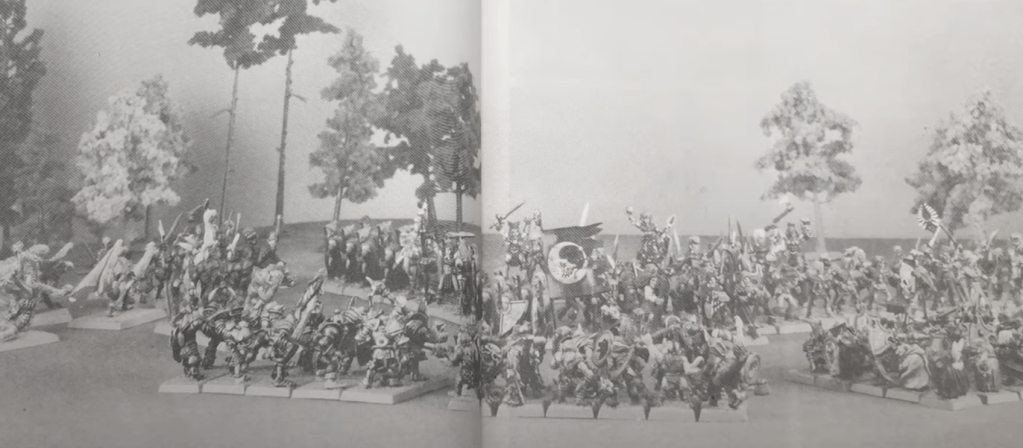
I have played a battle report of 3rd Edition (henceforth 3e) on YouTube and it’s linked in the blog on this entry – if you want a quick taster.
What does 3e give you?
A solid system
The systems in 3e have really stood the test of time – they may not be perfect, but you can broadly expect to understand the mechanics of the system: movement, shooting, close combat, rolling to-hit, to-wound, etc.
There are HUGE numbers of advanced rules – animal handlers, setting fire to buildings, sieges, aerial combat, mixed ranks and baggage trains – but they are all optional and included in the book for you to enjoy at your leisure.
Characterful
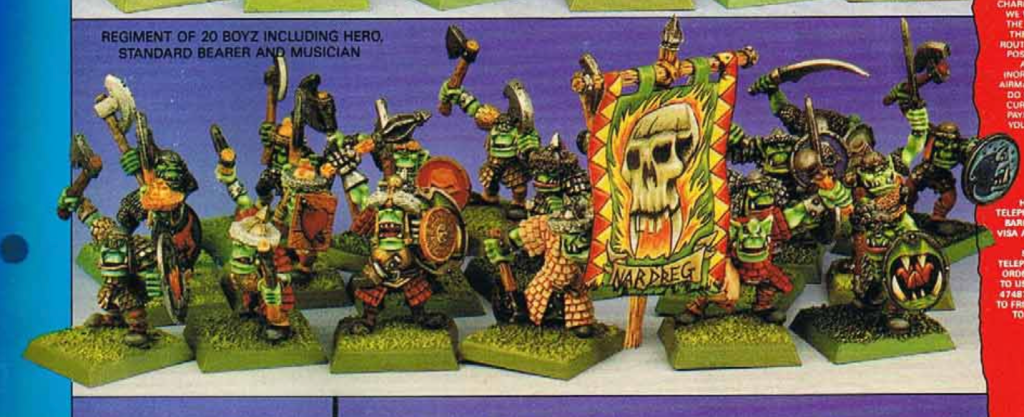
In 3e you really do have a large proportion of roleplaying – there is precious little in the way of army building without Warhammer Armies, and there is little expected in the way of balance: instead it is about creating a shared narrative.

When so much of the wargaming world is obsessed with abstraction, it is a real treat to have such strong characterisation of armies, figures and units.
Heroes
The majority of what you see is very familiar, with a couple of small caveats – namely that hero levels denote the number of stat points above the rank and file they are, with 5 and 10 being bound to a unit, and 15+ being independent

Magic
Magic operates differently, with each wizard rolling for spells and then having an overall magic capacity which is burnt down over the course of a battle to the point where they may well kill or incapacitate them.

One major change is that spells can be cast before the battle commences – Doomweaver’s “ignite missiles” could be cast before turn 1 (with the resultant affect on his magical resources), etc.
Cool, intelligence and Willpower
I joined the wargaming world just around the time of 4th edition fantasy (which I never really played in the wild) and 2nd Edition 40k – so never really dealt with these extended leadership attributes, but they do pretty much what they say on the tin – Cool is for tests for hatred/frenzy/fear, Leadership is for tests for panic, movement, rallying.

Willpower and Intelligence are largely to retain cross-compatiblity with WHFRP – but can be used for resisting magic and/or other RP/scenario specific needs.
We’ve had ‘first movement’ phase, but what about ‘second movement’ phase?
One of the last major distinctions for 3e is that ‘march’ moves are split, with the second half of the movement occurring after shooting and close combat.
In theory this allowed lines to be bolstered if they were faltering after close combat/shooting, or for friendly units to move around shooters which would have their LoS blocked by a March move.
This meant there was less ‘locking’ of movement, and could be more fluid and reactive. Whether this actually occurs is up for debate, but it’s hardly a major time sink!
house rules
Casualty Removal
One of the big things that jumps out about older games is the expectation of casualty removal from ranked units – sometimes that is to physically reduce the unit size as it takes casualties, and other times to specifically illustrate how many figures are in contact with other figures during combat.
I can’t afford the time or space to build out a huge 28mm rank and flank army, so I have built them in 10mm with unit bases, and some simple house-rules even things out.
For casualty removal, this means that each base represents 5/3/1 figure depending on whether they’re infantry/cavalry, large figures, or a monster – you simply keep track of how many figures are left ‘per base’ with a small D6, removing the base when all the figures are dead.
There really is no need for individual casualty removal on the tabletop, nor for different base sizes.
House Rules for combat
With the unit-base paradigm, one simply keeps track of how many possible casualties there are with the less of either a) the casualty dice next to the base, or b) that one individual can never attack more than 2, monstrous infantry no more than 3, and a monster no more than 5 targets and vice-versa
In 3rd Edition unlike later, characters do not simply keep chopping through units – but with different statistics and equipment they need to be rolled separately rather than buffing the unit they join.
What is less good?
The biggest drawback for 3e is that it’s a game designed for relatively large armies, played over 2-3 hours (there is a commonly accepted trope of a time limit). It is absolutely serviceable at 1500-2000pts, but is balanced for 3000 – which means about 10-15 units per side.
With some rules which wipe out entire regiments of figures in a single dice roll (such as being caught in a pursuit, or a chain-reaction of panic), you need enough units on the table to be able to resist this – or a GM to hand wave it: either way is fine.
If you feel that the enjoyment comes from a perfectly balanced, tournament-ready game of symmetrical armies and approved scenery then this is absolutely not the game for you.
How do I get started?
Well, 3e is well out of print and while there are PDF’s available, I have distilled 90% of the rules required for play in the following Quick Reference sheet:
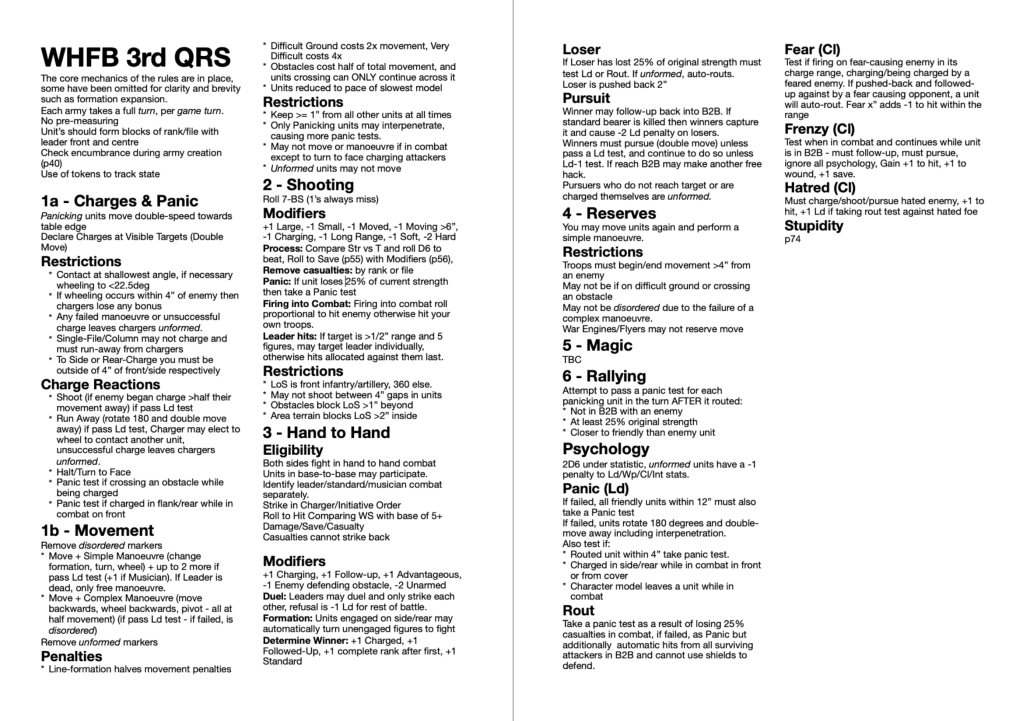
The original White Dwarf Playsheet is here:
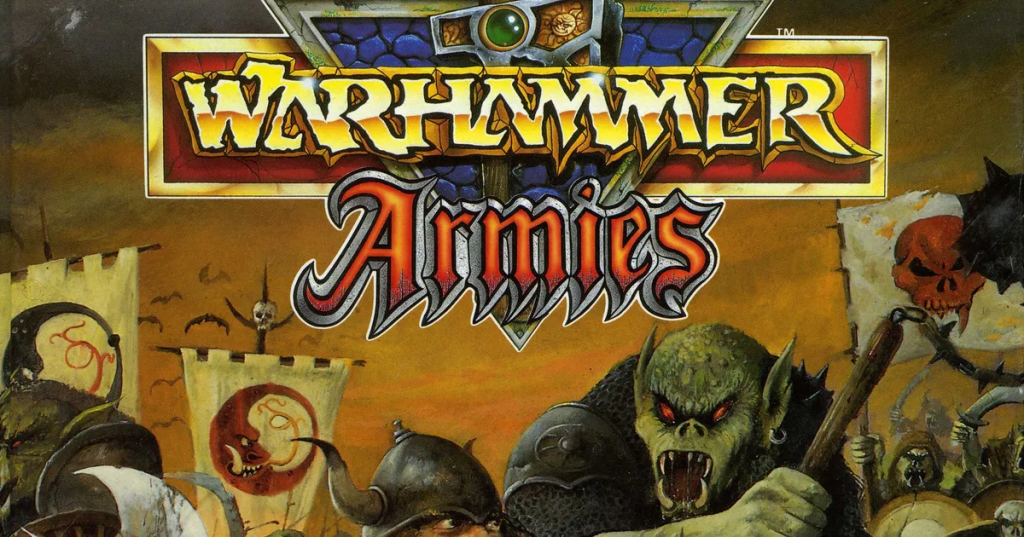
You will need to buy or obtain a copy of Warhammer: Armies in order to build your lists out, however – and that’s not possible to reproduce here but can be had relatively cheaply on eBay.


 William's Wargames
Leave a comment